
Why Minimal Art Feels So Powerful: The Beauty of Simplicity

Minimal art often surprises people. At first glance, it might seem too simple, almost empty. Yet, many find it deeply moving and powerful. How can something so stripped down evoke such strong feelings? This question lies at the heart of minimal art’s appeal. It is not just about fewer elements; it is about creating space—space for attention, emotion, reflection, and imagination. This article explores why minimal art feels so powerful and how its simplicity opens up a rich experience for viewers, artists, collectors, architects, and interior designers alike.
What Is Minimal Art?
Minimal art is often misunderstood as just “art with less.” In reality, it is a complex and varied approach that values simplicity but never at the cost of meaning or impact. To understand minimal art, it helps to look at its different forms and contexts.
Minimal Art as an Artistic Movement
Minimal art emerged in the 1960s as a reaction against the emotional intensity and complexity of abstract expressionism. Artists like Donald Judd, Agnes Martin, and Frank Stella focused on simple shapes, clean lines, and industrial materials. Their goal was to remove personal expression and narrative, emphasizing the artwork’s physical presence and form. This movement challenged traditional ideas about what art should be.
Minimalist Visual Language
Beyond the historical movement, minimalism refers to a visual language that uses:
Simple forms such as squares, circles, or straight lines
Limited color palettes, often monochrome or neutral tones
Repetition and rhythm to create harmony
Geometry and balance to organize space
Negative space to highlight what is present
This language is flexible and can be adapted to many styles and purposes.
Contemporary Minimalist Art
Today, minimalism continues to evolve. Contemporary artists may combine minimal forms with new materials, technology, or cultural references. The focus remains on clarity and restraint but allows for personal interpretation and emotional depth.
Minimalism in Interior Design
Minimalism also influences interior design, where the goal is to create calm, uncluttered spaces that feel open and inviting. Designers use minimal art principles to balance function and beauty, often incorporating:
Clean lines and simple furniture
Neutral or muted colors
Thoughtful use of light and shadow
Careful placement of objects to create flow
Minimalism in design is not about removing everything but about choosing what truly matters.
Minimal Does Not Mean Empty
A common misconception is that minimal art is “nothing” or “empty.” In fact, simplicity requires careful decisions and intense focus. When an artwork has fewer elements, each one carries more weight. This demands attention to:
Proportion: The size relationship between elements affects harmony and tension.
Placement: Where something sits in space changes how we perceive it.
Scale: Large or small elements can evoke different feelings of intimacy or grandeur.
Rhythm: Repetition and spacing create movement and balance.
Contrast: Differences in color, texture, or shape highlight key features.
Removing something can be as important as adding. By eliminating distractions, minimal art invites us to see details we might otherwise miss. It encourages us to slow down and engage deeply.
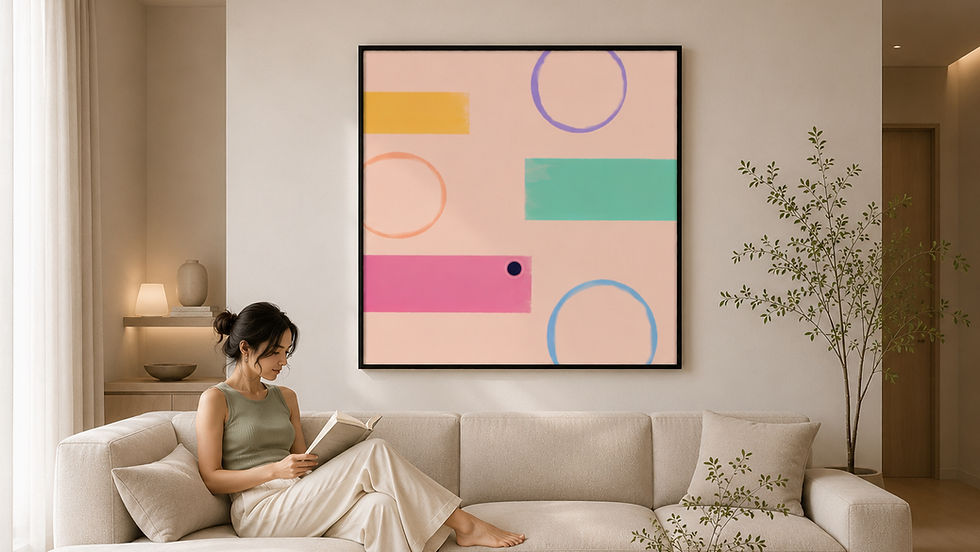
Minimal art uses space and simple forms to focus attention on subtle details.
How Minimal Art Creates Space for Emotion and Reflection
Minimal art’s power lies in its ability to create emotional and mental space. When we look at a complex painting, our eyes jump from one detail to another. Minimal art slows this process, inviting quiet contemplation.
Attention
With fewer elements, minimal art demands focused attention. Each line, shape, or color becomes significant. This focus can heighten awareness and presence, similar to meditation.
Emotion
Minimal art often evokes subtle emotions rather than dramatic ones. The calmness of a blank space or the precision of a geometric form can inspire feelings of peace, curiosity, or even tension. The viewer’s response becomes part of the artwork.
Reflection
The simplicity of minimal art leaves room for personal interpretation. Without a clear story or image, viewers bring their own thoughts and memories. This openness encourages reflection and introspection.
Perception and Imagination
Minimal art challenges our perception. It asks us to notice relationships between elements and to imagine what is not shown. This active engagement makes the experience richer and more personal.
Stillness
In a noisy world, minimal art offers stillness. Its quiet presence can calm the mind and create a sense of order and balance.
Examples That Show Minimal Art’s Strength
Agnes Martin’s Grids
Agnes Martin’s delicate grids of faint lines and soft colors show how minimal elements can express complex emotions like serenity and joy. Her work feels both precise and poetic.
Donald Judd’s Sculptures
Donald Judd’s simple geometric boxes emphasize material and space. Their repetition and scale create a powerful physical presence that invites viewers to move around and experience the work from different angles.
Contemporary Minimalist Interiors
Spaces designed with minimal art principles often feel larger and more inviting. For example, a living room with a single large abstract painting, neutral walls, and carefully chosen furniture can feel both elegant and comfortable.
Why Removing Visual Information Makes Art Stronger
Removing unnecessary elements is not about making art weaker but about making it clearer and more impactful. This process is similar to editing a poem or a piece of music. Every word or note must earn its place.
Clarity
Fewer elements reduce noise and confusion. The message or feeling becomes easier to grasp.
Focus
The viewer’s eye is guided intentionally. This focus can create a stronger emotional connection.
Balance
Minimal art often achieves a delicate balance between presence and absence. This balance creates harmony and tension that hold the viewer’s interest.
Timelessness
Because minimal art avoids trends and excess, it often feels timeless and universal.
Minimal Art’s Role in Architecture and Interior Design
Minimal art principles extend beyond galleries into the spaces we inhabit. Architects and interior designers use minimalism to create environments that support well-being and creativity.
Light and shadow: Minimal design uses natural light and shadows to add depth and interest.
Materials: Simple, honest materials like wood, stone, and metal create texture without clutter.
Functionality: Every element has a purpose, reducing distractions and improving comfort.
Connection: Minimal spaces often connect indoors and outdoors, enhancing a sense of openness.
These qualities make minimal art and design appealing for homes, offices, and public spaces.
How to Appreciate Minimal Art
If you are new to minimal art, try these approaches:
Slow down: Spend time with the artwork. Notice details and relationships.
Observe space: Pay attention to what is not there as much as what is.
Reflect: Consider how the artwork makes you feel or what it reminds you of.
Explore context: Learn about the artist’s intentions and the work’s history.
Visit in person: Minimal art often changes with light and perspective, best seen live.
Minimal art shows us that less can be more. By stripping away the unnecessary, it creates room for deeper attention, emotion, and thought. Its power lies in simplicity that invites us to engage fully and personally. Next time you encounter a minimalist artwork or space, pause and explore how its quiet presence speaks volumes.


Comments