
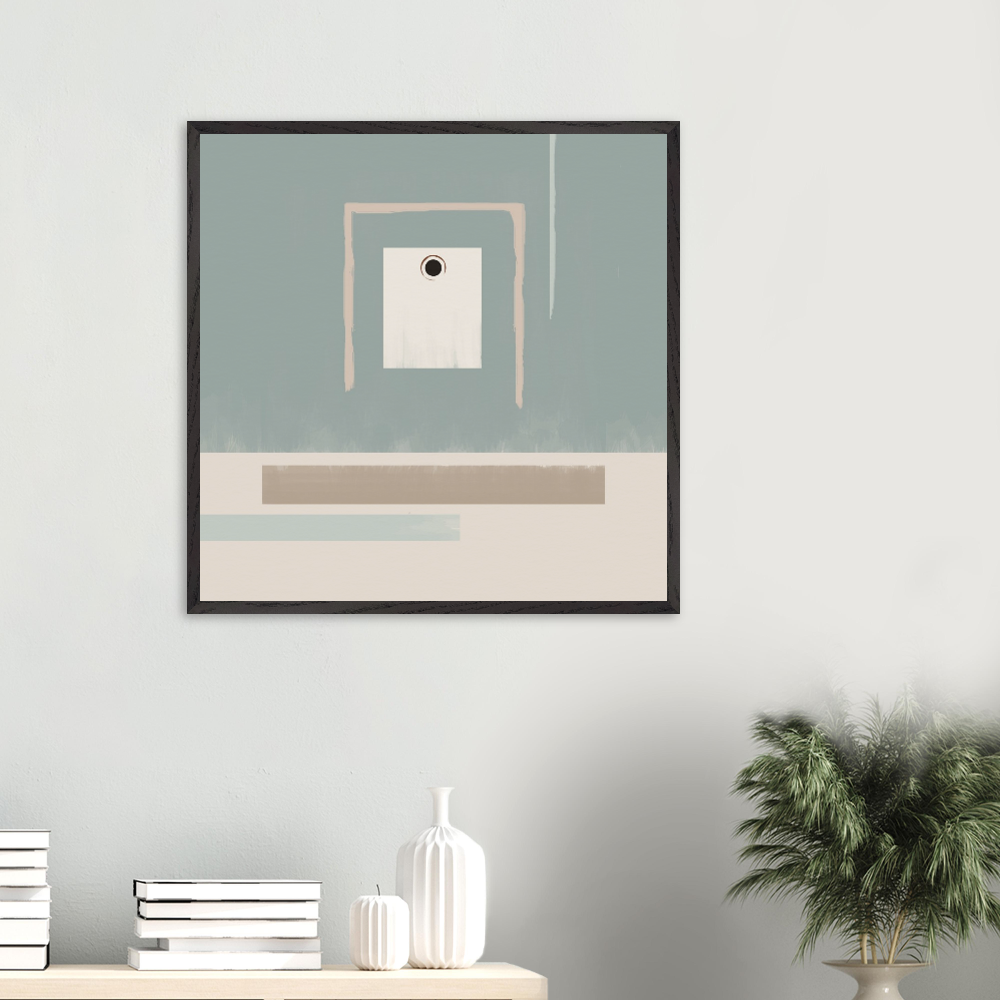

Quiet Intimacy
Form of Feeling Series
Overview
Quiet Intimacy explores the delicate process of healing after emotional pain. Through incomplete forms, protected spaces, and restrained color relationships, the artwork reflects the gradual return of trust, tenderness, and inner closeness. Rather than portraying recovery as a dramatic transformation, it embraces vulnerability and the quiet beauty of becoming whole again.
Visual Narrative
A muted teal field surrounds the composition, creating an emotional atmosphere within which healing unfolds. At its center, an incomplete white structure emerges, enclosed by a broken boundary that appears neither fully open nor completely closed. The unfinished form suggests a self shaped by experience and still in the process of recovery.
Near the upper edge of this intimate space rests a dark circle, the quiet center of the work. Surrounding it is a broken ring, symbolizing a condition that remains fragile yet enduring. Though incomplete, the circle continues to hold and protect what lies within, suggesting that healing is an ongoing process rather than a final destination.
A small area of bare linen surrounds the dark center, creating a feeling of intimacy and tenderness. Because this soft space occupies only a limited area, the closeness it represents feels quiet and restrained, present, but not yet fully expressed.
Below, a horizontal rectangular field introduces a sense of grounding and emotional permission. It becomes a place where emotions are allowed to exist naturally, without pressure or expectation. Within this quiet foundation, feelings no longer seek explanation or resolution; they are simply allowed to be.
Philosophy
Quiet Intimacy reflects the stage that follows emotional pain, when healing has begun but vulnerability remains.
Not every wound demands immediate closure. Sometimes recovery takes place quietly, through moments of acceptance, patience, and the gradual return of trust. Intimacy itself rarely arrives fully formed. It begins gently, as a feeling that exists before it can be completely expressed.
The incomplete forms throughout the composition suggest that brokenness and wholeness are not opposites. They often coexist. Healing is not the restoration of a previous state, but the emergence of a new relationship with oneself.
The dark circle represents an enduring stillness that remains beneath emotional change. The broken ring surrounding it speaks not of damage, but of recovery. The bare linen space suggests a tenderness that has returned, though cautiously and with quiet humility.
The lower field proposes something even more fundamental: healing begins when emotions are no longer forced to disappear. Joy, sorrow, longing, and hope are allowed to exist softly and without pressure. Acceptance becomes more important than perfection.
Quiet Intimacy suggests that true closeness, whether with oneself or with others, does not arise from certainty or flawless wholeness. It emerges slowly, through gentleness, vulnerability, and the courage to remain open while still healing.
Neuroaesthetic Approach
Simple geometry, muted colors, and generous negative space create a calm and contemplative viewing experience. The central dark circle naturally attracts attention, providing a stable focal point amidst incomplete boundaries and open forms.
The muted teal environment evokes calm and restoration, while the restrained use of bare linen tones introduces warmth and emotional comfort. The spacious composition reduces visual complexity, allowing the eye to move slowly and naturally through the artwork.
The balance between broken and complete forms creates subtle tension without discomfort. Together, color and composition mirror the emotional experience of healing itself, fragile, gradual, and deeply human.
Artistic Approach
Using a minimalist visual language of shape, color, and space, the artwork transforms emotional recovery into a universal visual experience. Incomplete forms, protected spaces, and restrained colors become symbols of vulnerability, trust, and the gradual return of inner closeness.
Interior Aesthetic
Its muted palette and contemplative composition complement contemporary, minimalist, Scandinavian, Japandi, and modern interiors. The artwork brings softness, quiet sophistication, and emotional warmth to bedrooms, living rooms, studios, and reflective spaces.
Artwork Details
Style: Contemporary Abstract | Emotional Minimalism
Themes: Healing • Vulnerability • Recovery • Trust • Tenderness • Emotional Renewal • Acceptance • Quiet Closeness • Inner Stillness
Mood: Calm • Gentle • Reflective
Series: Form of Feeling
Limited Edition Fine Art Print
• 40 × 40 cm (16 × 16 in) — Edition of 25
• 50 × 50 cm (20 × 20 in) — Edition of 15
• 70 × 70 cm (28 × 28 in) — Edition of 10
Details
• Museum-quality matte fine art paper (250 gsm)
• Archival print for long-lasting color and detail
• Premium wooden frame with shatter-resistant acrylic glass
• Worldwide shipping
• Certificate of Authenticity included
Quiet Intimacy – Limited Edition Abstract Wall Art Print | Form of Feeling
Originally created as a digital composition, this artwork is professionally produced as a physical print using premium materials.
Copyright & Usage
© Sachin Sathawane – Pencil Spark. All rights reserved.
This artwork is for personal use only and may not be reproduced, resold, or used for commercial purposes without permission.Our ready-to-hang premium wooden frames, crafted from responsibly sourced oak or ash, feature unique wood grains for added character. The posters are printed on master's edition, museum-quality paper—off-white, uncoated, and ideal for those seeking world-class quality: Ready-to-hang: Includes hanging kit, ready to hang directly on the wall. Frame Material: Responsibly sourced oak and ash wood. Frame Measurements: 20mm (0.79") thick and wide, wider than the classic 14mm (0.55") frame. Paper Weight: 250 gsm (110 lb), thickness: 0.29 mm (11.4 mils), ideal for fine art. Paper Finishing: Matte, uncoated, natural white, archival museum-quality paper. Protection: Shatterproof plexiglass protects the poster. Sustainable Paper: FSC-certified materials or equivalent.
A certificate of authenticity will be provided digitally after purchase, confirming the originality and artist attribution of the artwork.
