
Why Atmosphere in Art Matters More Than Detail

Updated: Sep 10
I have never been very interested in proving how much I can draw.
That may sound strange coming from an artist. Drawing often gets judged by control, precision, and the ability to make an image look real. People notice a perfectly rendered eye, a strand of hair, a glass reflection, or a hand drawn with every crease in place. I understand that admiration. I feel it too.
But when I create work through Pencil Spark, I am usually listening for something quieter.
I am asking a different question.
Not how much detail can I add, but how much can I make someone feel with less?
That question has shaped the way I think about atmosphere in art. It has changed how I use space, color, marks, softness, contrast, and silence. I do not want every artwork to explain itself too quickly. I want some parts to remain open, like mist, memory, or a room after someone has left.
For me, art does not need to describe everything in order to say something true.

Why I Don't Focus on Detail
I want to be clear about something first. Detailed and realistic art takes real skill.
To draw a face with accurate proportion, to paint skin with believable light, to render glass, fabric, water, metal, or hair, that requires patience and knowledge. It asks for discipline. It asks for years of looking. I respect that deeply.
Some artists build a whole universe through detail. Their work invites the eye to stay close, to travel across surfaces, and to discover small decisions. That kind of work can be moving, beautiful, and powerful.
My path is simply different.
When I sit with a blank surface, I am not drawn first to accuracy. I am drawn to atmosphere, emotion, mood, silence, space, perception, simplicity, and feeling. I am interested in what happens before something becomes clear.
A blurred edge can move me more than a sharp one. A quiet field of color can feel more honest than a crowded scene. A single line can carry more tension than a fully described object.
Sometimes detail gives the eye something to hold. Sometimes it gives the eye too much to do.
When I remove unnecessary detail, I am not trying to make the work empty. I am trying to make room. Room for breath. Room for memory. Room for the viewer to enter the image without being told exactly where to stand.
There is a kind of emotional pressure that appears when a work becomes simple enough. The fewer marks there are, the more each one matters. A pale shape near the edge of the paper can feel lonely. A dark mark in a wide open space can feel heavy. A soft glow can feel like hope, or distance, or something half-remembered.
This is not a rule for all art. It is only my choice.
I do not believe every artwork should be minimal. I do not believe detail is a weakness. I only know that my own work becomes more alive when I stop trying to show everything.
What Is Atmosphere in Art?
Atmosphere is the feeling that surrounds what we see.
It is not only the subject. It is not only the object, face, landscape, figure, or form. It is the mood that rises from the whole work.
A painting of a chair can feel warm, lonely, sacred, cold, tense, playful, or forgotten. The chair is only the visible thing. The atmosphere is what gathers around it.
That gathering can come from many simple choices:
Color
Light
Contrast
Composition
Negative space
Texture
Rhythm
Softness
Distance
Restraint
Color can change everything. A gray-blue can make an image feel like early morning. A deep red can feel intimate or uneasy. A pale yellow can feel fragile, like light touching a wall for only a few minutes.
Light creates emotional temperature. Strong light can reveal. Dim light can protect. A soft glow can make the image feel as if it is remembering itself.
Contrast gives weight. A dark form placed in a pale field can feel like a thought that will not leave. Low contrast can make the work feel quiet, almost disappearing.
Composition decides where the feeling rests. A shape in the center can feel still. A shape near the edge can feel unstable or alone. A large empty area can make a small mark feel more human.
Negative space is especially important to me. Empty space is not nothing. It is active. It holds silence. It creates pause. It lets the viewer feel the distance between things.

Atmosphere is difficult to measure because it does not always announce itself. It is felt before it is understood.
That is why I trust it.
A detailed description can be impressive, but atmosphere can stay in the body. It can follow someone after they stop looking. It can become a feeling they cannot fully name.
Showing Something and Creating an Atmosphere Around Something
There is a difference between showing something and creating an atmosphere around something.
Showing something often means making it visible, clear, and recognizable. If I draw a tree with branches, bark, leaves, roots, and shadows, I am giving information. I am saying, this is a tree.
Creating an atmosphere around a tree is different. I might draw only the suggestion of a vertical form. I might surround it with pale space. I might let the edges dissolve. I might use a muted green that feels like rain or a gray wash that feels like memory.
The viewer may still sense a tree, but the main experience becomes something else. Solitude. Weather. Time. Distance. Stillness.
This matters to me because life often feels that way. We rarely experience things as pure information. We experience them through emotion.
A room is not only walls and furniture. It can feel safe, tense, peaceful, abandoned, or full of someone’s presence.
A face is not only eyes, nose, and mouth. It can feel open, guarded, tired, luminous, or far away.
A landscape is not only land and sky. It can feel like waiting.
Art can honor that. It can move beyond the object and touch the air around it.
When I reduce detail, I am not erasing meaning. I am shifting attention. I am asking the viewer to feel the temperature of the image instead of only naming what appears in it.
Some works speak through clarity. Some speak through suggestion. I am drawn to suggestion because it respects the mystery of perception.
We do not just see the world. We feel our way through it.
The Power of Less
Less is not easier.
A simple artwork can fail very quickly. If there are only a few marks, each one has to carry weight. If the color is quiet, the relationships between tones become more important. If the composition has a lot of open space, the placement of one line can change the whole emotional balance.
Minimal work asks for honesty. There is not much to hide behind.
When I remove details, I have to ask what remains. Does the image still breathe? Does it still hold tension? Does it still invite someone to stay?
The aim is not to make something bare for the sake of being bare. Simplicity only matters when it deepens the experience.
I often think about silence in music. Silence is not the absence of music. It shapes the sound around it. It gives the ear time to feel what has happened and prepare for what comes next.
Space in art works in a similar way.
A quiet area of paper or canvas allows a mark to become more intense. A soft field of color allows a small change in tone to feel important. A restrained image can make the viewer slow down because there is less noise to consume.
I like that slowness.
Much of the world asks us to look quickly. Scroll, judge, move on. But art can ask for a different kind of attention. It can create a pause. It can give the eye somewhere quiet to rest.
That pause is part of the work.

What Art History Taught Me About Atmosphere
I am not the first artist to care more about atmosphere than detail.
Many artists across history have understood that a work can be powerful without describing everything. Their approaches were different, but they all give me permission to trust feeling.
J.M.W. Turner often let light and weather overwhelm form. In some of his paintings, ships, buildings, and figures seem to dissolve into fog, fire, and sea. The subject is still there, but the atmosphere becomes the main event.
James McNeill Whistler used subtle color and tonal harmony to create mood. His nocturnes do not depend on sharp description. They feel like evenings remembered through sound, air, and distance.
Mark Rothko removed recognizable objects almost completely. His large fields of color do not tell a story in the usual sense, but they can create a strong emotional presence. Standing before them can feel quiet, intense, and deeply human.
Traditional ink painting also teaches restraint. A few brush marks can suggest mountains, water, mist, or a branch. The empty paper is not unfinished. It is part of the world being created.
These examples matter to me because they remind me that art does not have to explain everything. It can suggest. It can leave space. It can trust the viewer.
I think of Pencil Spark in that spirit, although in my own small way. I am interested in work that feels open, light, and emotionally direct. I want the image to have presence without demanding attention too loudly.
The art I return to most often does not always impress me with complexity. It changes the air around me.
Silence, Space, and Perception
Silence is one of the materials I care about most.
Of course, silence is not something I can hold in my hand like a pencil. But I can create conditions for it. I can leave areas untouched. I can lower the contrast. I can soften an edge. I can stop before the image becomes overworked.
Stopping is difficult.
There is always a temptation to add more. Another line. Another texture. Another form. Another explanation. Detail can become a way to calm the artist’s fear. If the work feels uncertain, I might want to keep adding until uncertainty disappears.
But uncertainty is often where the feeling lives.
When a work remains slightly open, the viewer has to meet it halfway. They bring their own memory, mood, and attention. They complete something quietly inside themselves.
That is why perception matters so much to me. Two people can stand in front of the same simple image and feel different things. One may see peace. Another may feel grief. Another may sense distance, or tenderness, or calm.
I do not see that as a problem. I see it as part of the life of the artwork.
A highly detailed image can guide the viewer with great precision. A more atmospheric image leaves room for personal experience. Neither way is better by default. They simply create different kinds of encounters.
The encounter I care about is intimate. I want the work to feel like a quiet place where someone can notice their own response.
The Emotional Strength of an Unfinished Feeling
Some artworks feel complete because every part is resolved.
Others feel complete because they know what to leave unresolved.
I am drawn to the second kind.
An unfinished feeling can be emotionally strong because it resembles memory. When we remember a place, we rarely remember every detail. We remember the light. The sound. The color of the room. The feeling in our chest. A doorway. A shadow. A small fragment that somehow holds the whole experience.
Atmospheric art works in that same way. It does not need to provide a full report. It can offer a trace.
A trace may be enough.
A faint line can suggest a body. A soft blur can suggest movement. A pale field can suggest distance. A dark edge can suggest something just outside view.
I like when an artwork feels as if it has just appeared or as if it is about to disappear. That delicate state makes the viewer more aware. It creates a feeling of care. The image seems quiet but not weak.
There is strength in restraint. There is strength in not forcing the meaning to become fixed.
When I make art, I often find myself removing the parts that speak too loudly. I want the remaining elements to speak softly but clearly. I want them to leave an emotional afterimage.
How Pencil Spark Thinks About Feeling
Pencil Spark began, for me, with the belief that small, simple marks can carry a spark of feeling.
The name itself holds that contrast. Pencil suggests something humble, ordinary, close to the hand. Spark suggests life, energy, a sudden flash. I like the meeting of those two ideas.
My work is not built around visual excess. It is built around attention.
I pay attention to where a mark sits. I pay attention to how much space surrounds it. I pay attention to whether a color feels too heavy, too sweet, too cold, or too certain. I pay attention to the moment when the work begins to breathe.
That moment is hard to describe, but I know it when I feel it.
The artwork stops being a collection of choices and becomes an experience. The surface holds a mood. The image begins to feel less made and more found.
That is what I am searching for.
I want someone to look at a piece and feel something before they know why. I want the work to feel simple at first, then slowly become more present. I want it to offer quiet instead of noise.
This does not mean every piece must be soft or peaceful. Atmosphere can be tense. It can be strange. It can feel heavy, distant, uncertain, or raw. But even then, I want the feeling to come through the whole image, not just through a detailed subject.
The atmosphere is the experience.

Why I Trust Feeling More Than Explanation
I do not want every artwork to answer itself.
Explanation has its place. Titles, statements, and context can help. But if the artwork only works because of explanation, something feels missing to me.
I want the image to carry its own weather.
When I stand before a work of art, I do not first ask for a theory. I notice what happens in my body. Do I slow down? Do I lean closer? Do I feel space open? Do I feel resistance? Do I feel calm, pressure, tenderness, loss?
Those first reactions matter.
They are not less serious because they are emotional. Feeling is a form of knowledge. It may not arrive in clean sentences, but it tells us something about how we are meeting the work.
That is why I trust atmosphere. It reaches places that description cannot always reach.
A detailed artwork can say, look at this. An atmospheric artwork can say, stay here for a moment.
I need both kinds of art in the world. But in my own practice, I keep returning to the second invitation.
What I Hope the Artwork Leaves Behind
I do not need someone to notice every decision I made.
I do not need them to count the layers, understand the process, or identify every reference. If they do, that is fine. But it is not the main thing.
What I hope is simpler.
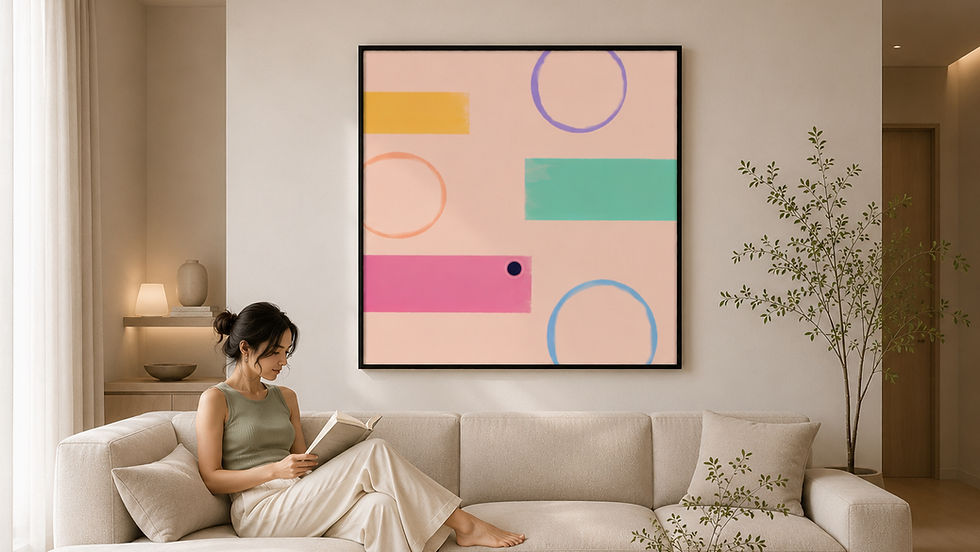
I hope the work changes the feeling of a room, even slightly. I hope it gives someone a pause. I hope it creates a small silence around itself. I hope it allows a viewer to feel something personal without being told exactly what to feel.
That is why atmosphere matters more than detail in my art.
Detail can describe the world with great beauty. Atmosphere can make us feel the world again.
For me, that is the deeper task. To make less carry more. To let space speak. To trust quiet marks. To create work that does not explain everything but still leaves something behind.
The Journey of Art and Emotion
Art is a journey, not just a destination. Each piece I create is a step along the path of exploration. I want to invite you along on this journey.
The Importance of Connection
Connection is vital in art. It is not just about the artist's intention but also about how the viewer engages with the work. I strive to create pieces that resonate on a personal level.
Embracing Vulnerability
Creating art requires vulnerability. It means exposing parts of myself and allowing others to see them. This openness can lead to deeper connections and understanding.
The Role of Intuition
Intuition plays a significant role in my creative process. I trust my instincts when making decisions about color, form, and composition. This trust allows me to create work that feels authentic and true.
The Impact of Environment
The environment in which art is displayed can greatly influence its perception. I believe that art should be experienced in a space that enhances its emotional impact.
The Future of Pencil Spark
As I continue to grow and evolve as an artist, I look forward to exploring new ideas and techniques. I want to push the boundaries of what art can be and how it can connect with people.
In conclusion, my journey with Pencil Spark is about creating art that speaks to the heart. I hope to inspire others to find their own voice and express their feelings through creativity. Together, we can explore the beauty of simplicity and the power of atmosphere in art.


Comments