
Understanding Neuroaesthetics: The Science of Art and Emotion

Neuroaesthetics is an emerging field at the intersection of neuroscience, psychology, and art. It investigates how the brain processes aesthetic experiences and how these experiences affect our emotions, thoughts, and behaviors. By combining brain imaging techniques with psychological studies, neuroaesthetics seeks to understand why certain artworks captivate us and how visual elements like color, shape, and pattern influence our mental states.
This field goes beyond traditional art criticism by grounding the aesthetic experience in brain activity. It asks questions such as: How does the brain respond to beauty? What neural pathways are involved when we appreciate abstract art? How do visual cues trigger emotional reactions? These insights help explain the deep connection between art and human nature.
How the Brain Responds to Art
When we view art, multiple brain regions work together to create the aesthetic experience. The visual cortex processes basic elements like color and form, while the limbic system handles emotional responses. The prefrontal cortex, responsible for higher-order thinking, evaluates meaning and context.
Studies using functional MRI (fMRI) show that viewing art activates reward centers in the brain, similar to those involved in food or social interactions. This activation releases dopamine, a neurotransmitter linked to pleasure and motivation. The brain’s response to art is not just about recognizing shapes or colors; it involves emotional engagement, memory recall, and even personal interpretation.
For example, abstract art often stimulates the brain differently than realistic images. Because abstract art lacks clear representation, it invites viewers to engage their imagination and emotions more actively. This interaction can lead to a richer, more personalized aesthetic experience.
Why Humans Are Naturally Drawn to Beauty
Humans have an innate attraction to beauty, which plays a role in survival and social bonding. From an evolutionary perspective, recognizing patterns and symmetry helped early humans identify safe environments and healthy mates. This preference for order and harmony still influences our aesthetic judgments today.
Beauty also signals positive emotions and well-being. When we encounter something beautiful, our brain releases chemicals that reduce stress and increase feelings of happiness. This natural draw to beauty explains why people seek out art, nature, and design that pleases the eye.
The psychology of art shows that this attraction is not purely visual but deeply emotional. Beauty can evoke nostalgia, awe, or calmness, connecting us to memories and feelings beyond the immediate moment.
The Emotional Impact of Color and Shape
Color psychology reveals that colors can evoke specific emotions and moods. Warm colors like red and orange often stimulate energy and excitement, while cool colors like blue and green promote calmness and relaxation. Artists use these effects to guide viewers’ emotional responses.
Shapes also carry emotional weight. Rounded shapes tend to feel soft and comforting, while sharp angles can create tension or excitement. Geometric art, with its precise lines and symmetry, often conveys balance and order, which the brain finds pleasing.
For instance, a painting dominated by cool blues and smooth curves might evoke tranquility, while one with bright reds and jagged edges could provoke intensity or urgency. Understanding these effects helps artists and viewers appreciate how visual elements shape emotional experiences.
Can Abstract Art Reduce Stress and Promote Well-Being?
Research suggests that abstract art can have therapeutic effects. Because abstract art encourages personal interpretation, it allows viewers to project their feelings and thoughts onto the work. This process can be calming and help reduce stress.
A study published in Frontiers in Psychology found that viewing abstract art activated brain areas linked to relaxation and positive emotions. Participants reported feeling less anxious after exposure to certain abstract compositions. This effect may be due to the brain’s engagement with patterns and colors that promote visual harmony.
Art therapy often incorporates abstract art to support mental health. By interacting with abstract forms, individuals can explore emotions non-verbally, fostering self-awareness and emotional release.

The Role of Pattern, Symmetry, and Visual Harmony
Patterns and symmetry play a crucial role in how we perceive beauty. The brain is wired to detect regularity and repetition, which provide a sense of order and predictability. Visual harmony arises when elements like color, shape, and spacing work together cohesively.
Geometric art often uses symmetry and repeating patterns to create a balanced composition. This balance appeals to the brain’s preference for structure and can evoke feelings of stability and peace.
For example, Japanese Zen-inspired art emphasizes simplicity, space, and restraint. Its uncluttered compositions encourage mindfulness and contemplation, revealing how visual harmony can contribute to emotional balance and inner stillness.
Neuroaesthetics and Contemporary Abstract Art
Contemporary abstract art challenges traditional notions of representation and invites viewers to explore form, color, and texture in new ways. Neuroaesthetics helps explain why abstract art can be so powerful despite or because of its ambiguity.
Abstract art activates brain regions involved in imagination and emotional processing. Without clear subjects, viewers fill in gaps with personal meaning, making the experience unique to each individual. This openness can stimulate creativity and emotional insight.
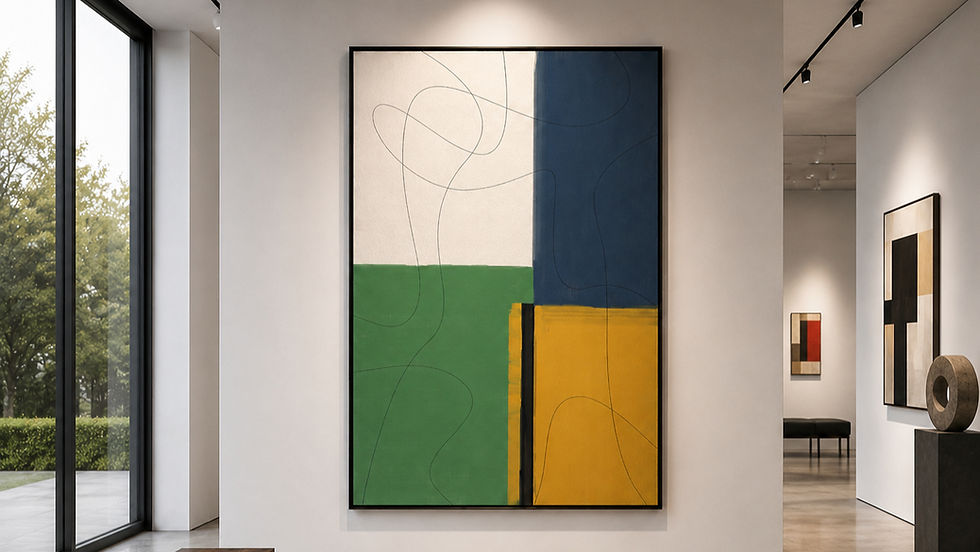
Contemporary geometric artworks, such as those in the Form of Feeling and Healing Forms series by Pencil Spark, use color, shape, and spatial relationships to evoke emotional and contemplative responses. Through imperfect alignments, balanced compositions, and recurring forms, these works invite viewers to engage with themes of uncertainty, stillness, and perception. Neuroaesthetic research suggests that the power of abstract art lies in its ability to simultaneously activate emotional, attentional, and meaning-making processes within the brain.
How Art Shapes Attention, Memory, and Perception
Art influences cognitive functions such as attention, memory, and perception. Viewing art requires focused attention, which can improve concentration and mindfulness. The brain also encodes visual details and emotional context, enhancing memory formation.
Visual perception is shaped by how the brain interprets lines, colors, and spatial relationships. Art can alter perception by presenting familiar elements in new ways, encouraging viewers to see the world differently.
For example, optical illusions in art demonstrate how perception can be manipulated, revealing the brain’s active role in constructing reality. This insight helps explain why art can expand our understanding and awareness.
The Future of Neuroaesthetics and Human Creativity
As technology advances, neuroaesthetics will deepen our understanding of how art affects the brain and well-being. Brain imaging and artificial intelligence may help create personalized art experiences that promote mental health.
This field also offers new tools for artists to explore creativity by understanding how different visual elements influence the mind. The collaboration between neuroscience and art promises to enrich both disciplines and improve human life.
By studying the neuroscience of beauty, we can design environments, therapies, and artworks that support emotional balance and cognitive growth.
Conclusion: Embracing the Power of Art
Art is more than just a visual experience; it is a profound journey into our minds and emotions. By understanding neuroaesthetics, we can appreciate how art influences our thoughts and feelings. This knowledge empowers us to choose art that resonates with us, enhancing our well-being and enriching our lives.
Whether you are drawn to contemporary abstract pieces or the intricate details of geometric art, remember that your emotional response is valid. Embrace the beauty of art and let it inspire you to explore your creativity and emotions.
Art has the potential to transform our lives, and understanding its impact on our brains can help us navigate our emotional landscapes. So, dive into the world of art, and allow it to guide you on your journey of self-discovery and expression.


Comments