
A Comprehensive Guide to Choosing the Perfect Abstract Art for Your Home

Abstract art has become a defining feature of modern interiors, captivating homeowners, designers, and collectors alike. Its appeal goes beyond mere decoration, offering a unique way to shape the atmosphere of a home and evoke deep emotional responses. Choosing abstract art is not just about matching colors or filling empty walls; it is about selecting pieces that resonate personally, complement architectural elements, and enhance daily living.
This guide explores how to thoughtfully select abstract art that transforms your space into a sanctuary of expression and style.
Why Abstract Art Works in Every Home
Abstract art holds a timeless quality that allows it to transcend trends and styles. Its open-ended nature invites personal interpretation, making it a versatile choice for diverse interiors. Here are key reasons why abstract art fits seamlessly into any home:
Timeless Appeal
Abstract art does not rely on specific imagery or cultural references, which helps it remain relevant and fresh over time.
Open Interpretation
Each viewer can find their own meaning in abstract forms, colors, and textures, creating a personal connection that changes with mood and experience.
Emotional Connection
Abstract pieces often evoke feelings directly through color, shape, and movement, bypassing literal representation to touch the subconscious.
Flexibility Across Styles
Whether your home is minimalist, traditional, or eclectic, abstract art adapts easily, either by complementing or contrasting the existing décor.
Personal Meaning
Choosing abstract art allows you to express individuality and values, making your home a reflection of your inner world.
Start With Emotion, Not Decoration
Before considering furniture or accessories, ask yourself how you want a room to feel. Abstract art is a powerful tool for setting emotional tone. Here are some common moods to consider:
Calm
Soft, muted colors and gentle shapes can create a serene environment, perfect for relaxation.
Peaceful
Balanced compositions with harmonious color palettes foster tranquility and restfulness.
Energetic
Bold colors and dynamic forms inject vitality and movement, ideal for lively spaces.
Reflective
Subtle contrasts and layered textures encourage contemplation and introspection.
Warm
Earth tones and flowing lines bring a sense of comfort and welcome.
Balanced
Symmetry and rhythm in abstract art can promote a feeling of order and stability.
Let emotion guide your art selection. This approach ensures the artwork supports the room’s purpose and your well-being, rather than simply matching décor.
Understand the Purpose of Each Room
Different rooms serve distinct functions and moods. Selecting abstract art with these in mind enhances both aesthetics and experience.
Living Room
The living room is often the heart of social interaction. Choose large statement artworks or striking pieces that spark conversation. Consider:
Bold colors or forms that draw attention
Art that complements seating arrangements and encourages gathering
Pieces that reflect your personality and invite guests to engage
Bedroom
Bedrooms benefit from calming artwork that promotes rest. Look for:
Soft color palettes like pastels or earth tones
Gentle, flowing shapes that soothe the mind
Compositions that avoid visual clutter or harsh contrasts
Home Office
Art in a workspace should inspire focus and creativity. Select pieces that:
Use clear, defined shapes or lines to support mental clarity
Incorporate colors known to boost concentration, such as blues or greens
Stimulate imagination without overwhelming the senses
Meditation or Wellness Space
Minimalist abstract art works well here, emphasizing mindfulness and calm. Seek:
Simple, uncluttered designs
Neutral or monochromatic tones
Textures or forms that invite quiet reflection
Dining Area
Art in dining spaces should foster warmth and connection. Choose:
Warm colors like reds, oranges, or golds
Subtle visual interest that complements rather than competes with the meal
Pieces that encourage conversation and conviviality
Choose the Right Size
The size of your artwork impacts its presence and harmony within a room. Consider these options:
Large Statement Artwork
Works well in spacious rooms or above key furniture like sofas or beds. It anchors the space and becomes a focal point.
Gallery Walls
A curated collection of smaller pieces can create a dynamic, personalized display. Arrange with consistent spacing and varied sizes for balance.
Single Focal Pieces
One well-chosen artwork can define a room’s character without overwhelming it.
Scale Relative to Furniture
Artwork should generally be two-thirds to three-quarters the width of the furniture it hangs above for visual balance.
Hanging Height
Position art so the center sits at eye level, typically 57 to 60 inches from the floor, ensuring comfortable viewing.
Practical size recommendations:
Above a sofa: 60-90 inches wide
Over a bed: 48-72 inches wide
In hallways: smaller pieces 24-36 inches wide work well
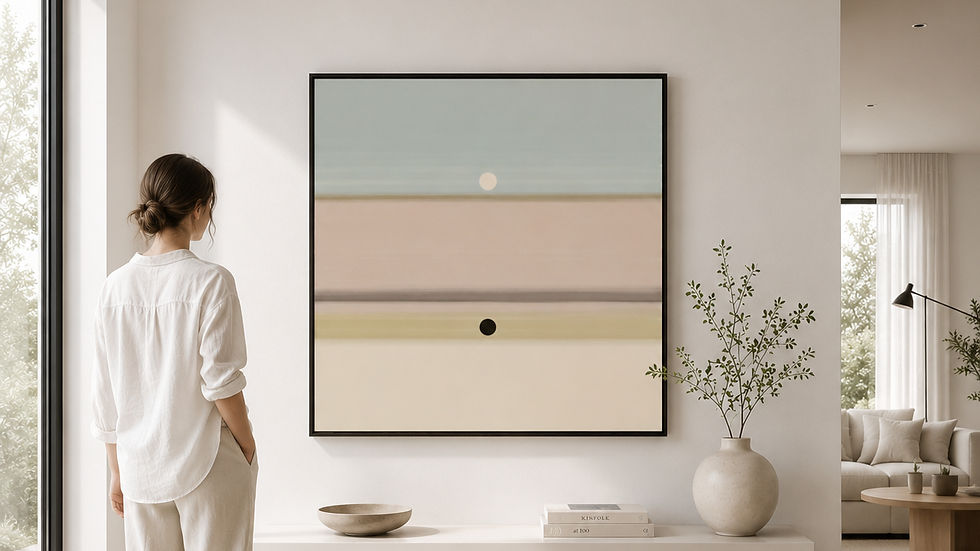
Color Matters, But Feeling Matters More
While color is an important element in abstract art, the feeling it evokes holds greater significance. Colors influence mood, but their impact depends on context and personal associations.
Consider the room’s lighting
Natural and artificial light affect how colors appear. Test artwork in different lighting conditions.
Think about emotional resonance
A color that feels energizing in one space might feel overwhelming in another.
Use color to support the room’s purpose
For example, blues and greens promote calm in bedrooms, while reds and oranges add warmth to dining areas.
Balance bold colors with neutral surroundings
This prevents the artwork from dominating the space and allows it to complement architectural features.
Ultimately, choose colors that speak to you and enhance the atmosphere you want to create.
How to Build an Emotional Connection With Abstract Art
Abstract art’s power lies in its ability to connect emotionally. To deepen this connection:
Spend time observing the piece in different moods and lighting
Reflect on what the shapes and colors evoke personally
Consider the artist’s intention and story behind the work
Allow your feelings to guide your choice rather than trends or opinions
This process ensures your art becomes a meaningful part of your home, not just decoration.
Integrating Abstract Art With Architecture
Abstract art should harmonize with your home’s architectural elements:
Match the artwork’s scale and style to room proportions and ceiling height
Use art to highlight architectural features like fireplaces, alcoves, or staircases
Choose frames and mounting styles that complement materials such as wood, metal, or stone
Consider the flow between rooms and how art transitions from one space to another
Thoughtful integration creates a cohesive environment where art and architecture enhance each other.
Final Thoughts on Choosing Abstract Art for Your Home
Selecting abstract art is a journey of discovery that enriches your living space and personal expression. Focus on the emotions you want to evoke, the function of each room, and the relationship between art and architecture. Size and color choices should support these priorities rather than dictate them.

Comments