
Why Modern Architecture Needs Contemporary Abstract Art

Modern architecture often draws admiration for its clarity, precision, and elegant simplicity. Yet, despite its many strengths, it can sometimes feel emotionally distant or sterile. This sensation arises because architecture, at its core, shapes physical space but does not always engage the human spirit fully. Contemporary abstract art offers a vital complement to modern architecture by infusing spaces with emotional depth, narrative, and a sense of soul. This article explores why modern architecture needs contemporary abstract art to create environments that resonate deeply with those who inhabit them.
Modern architecture is more than the sum of its materials and forms. It is an experience shaped by space, light, proportion, and human interaction. While architecture provides the framework, contemporary abstract art breathes life into that framework, transforming it from a mere structure into a place that feels alive and meaningful.
Architecture creates space. Art gives that space a soul.
What Defines Modern Architecture?
Modern architecture emerged as a response to the ornate styles of the past, championing a new language of design that prioritizes clarity and function. Its defining characteristics include:
Minimalism: Stripping away unnecessary decoration to reveal pure form.
Clean Geometry: Emphasizing simple shapes such as rectangles, squares, and circles.
Natural Light: Maximizing daylight to enhance the perception of openness.
Open Plans: Creating fluid, flexible spaces that encourage movement and interaction.
Honest Materials: Using materials in their natural state, such as exposed concrete, steel, and glass.
Simplicity: Focusing on essential elements without distraction.
Functional Beauty: Designing spaces that are both useful and aesthetically pleasing.
The deliberate removal of ornamentation in modern architecture is not about austerity but about clarity. By focusing on essentials, architects create spaces that feel calm and purposeful. Yet, this very clarity can sometimes lead to spaces that feel cold or impersonal without additional layers of meaning.
Why Architecture Alone Is Not Enough
Even the most beautifully designed modern buildings can feel emotionally incomplete. Architecture organizes space and provides structure, but it does not always engage the senses or evoke feeling. This is where art plays a crucial role.
Architecture organizes space: It defines boundaries, circulation, and function.
Art humanizes space: It introduces emotion, narrative, and personal connection.
Architecture provides structure: It creates order and stability.
Art provides atmosphere: It shapes mood and invites reflection.
People remember spaces that make them feel something—whether awe, comfort, inspiration, or curiosity. Without emotional engagement, a space risks becoming forgettable, no matter how well designed. Contemporary abstract art offers a way to bridge this gap by adding layers of meaning and sensory richness.
Contemporary Abstract Art as an Architectural Element
Abstract art shares many qualities with modern architecture, making it a natural partner in design. Both disciplines explore form, space, and perception, but art adds a dimension of emotional resonance.
Geometry and Balance
Abstract art often employs geometric shapes and balanced compositions that echo architectural forms. This harmony creates a seamless visual dialogue between the artwork and the building.
Negative Space and Rhythm
Just as architects use negative space to define areas and guide movement, abstract artists manipulate empty space to create rhythm and tension. This interplay enhances the spatial experience.
Scale and Proportion
The scale of abstract artworks can complement architectural volumes, whether by contrasting with large open walls or by fitting intimate niches. Thoughtful proportion ensures the artwork feels integrated rather than imposed.
Color and Texture
While modern architecture often favors neutral palettes, abstract art introduces color and texture that enliven the environment. These elements can highlight architectural features or soften rigid lines.
Light Interaction
Both architecture and abstract art respond to light. Artworks with reflective surfaces, translucency, or layered textures change appearance throughout the day, creating dynamic experiences within static structures.

Case Studies: Where Architecture Meets Abstract Art
The Guggenheim Museum Bilbao
Frank Gehry’s iconic museum is a sculptural marvel, but its interior spaces come alive through carefully curated abstract artworks. The fluidity of Gehry’s forms finds resonance in the dynamic shapes and colors of the art, creating a dialogue that enhances visitor experience.
The Barcelona Pavilion
Ludwig Mies van der Rohe’s Barcelona Pavilion is a masterpiece of modernism, defined by clean lines and open space. Abstract sculptures and artworks placed within the pavilion add warmth and invite contemplation, balancing the architectural austerity.
Private Residences
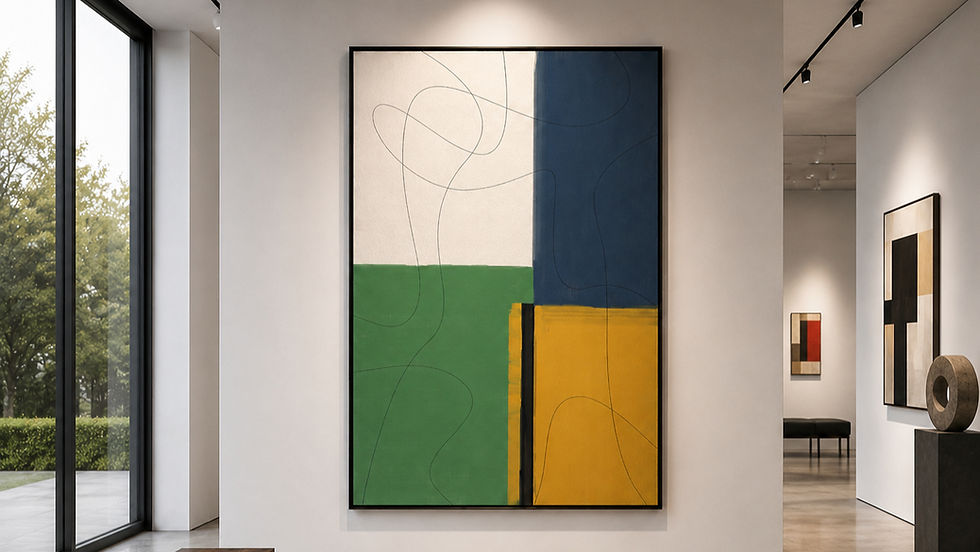
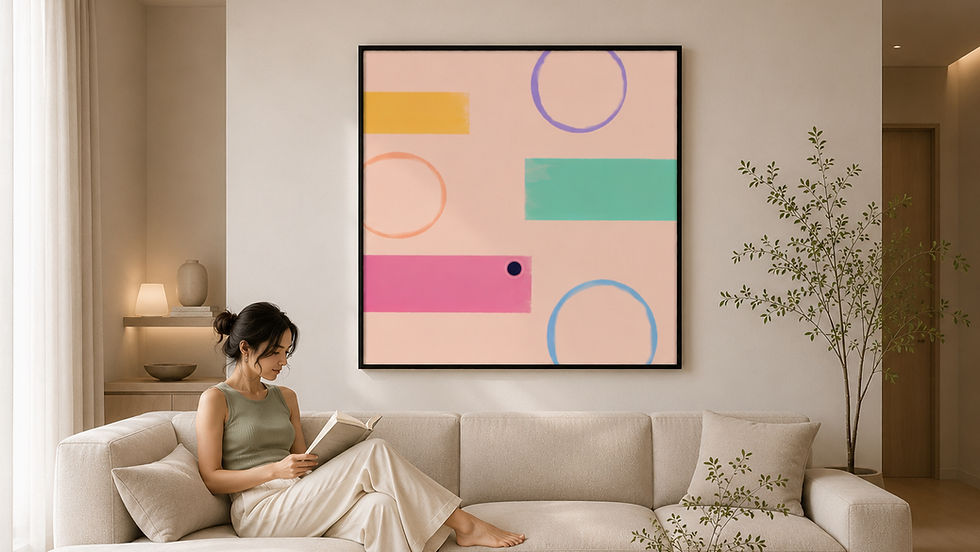
Luxury homeowners increasingly commission abstract art to personalize minimalist interiors. For example, a large-scale abstract canvas can become a focal point in a living room, breaking the monotony of white walls and adding a narrative layer that reflects the owner’s taste and personality.
How to Integrate Contemporary Abstract Art in Modern Architecture
Consider the Space
Analyze the architectural features, light conditions, and spatial flow. Choose artworks that complement these elements rather than compete with them.
Scale Matters
Select pieces that fit the scale of the room. Oversized works can anchor large spaces, while smaller pieces suit intimate areas.
Color Coordination
Use art to introduce color accents or harmonize with existing palettes. Abstract art allows flexibility in color choices, from bold contrasts to subtle tones.
Texture and Material
Match or contrast the textures of the artwork with architectural materials. For example, a rough-textured painting can soften sleek glass surfaces.
Lighting Design
Plan lighting to enhance the artwork’s presence. Adjustable spotlights or natural light can reveal textures and colors dynamically.
The Psychological Impact of Art in Architectural Spaces
Environmental psychology shows that art influences mood, cognition, and social interaction. Abstract art, by engaging the imagination and emotions, can:
Reduce stress and create calm
Stimulate creativity and curiosity
Encourage social connection through shared experience
Enhance a sense of identity and belonging
Incorporating abstract art into modern architecture transforms spaces from mere shelters into places that nurture well-being.
Final Thoughts
Modern architecture excels in creating clear, functional spaces, but it often needs contemporary abstract art to complete the experience. Abstract art introduces emotional depth, narrative, and sensory richness that architecture alone cannot provide. Together, they create environments that are not only visually striking but also deeply human.
For architects, interior designers, and homeowners seeking to craft soulful spaces, embracing contemporary abstract art is essential. It is the art that gives architecture its heart.

Comments